Hair thinning is one of the most common concerns patients experience as they age. For many people, the early stages of hair loss can feel frustrating and difficult to treat. PRP therapy has become an increasingly popular option for patients looking for a non-surgical approach to improving hair density and supporting healthier hair growth.
But does PRP for hair loss actually work?
The answer is that PRP can be highly effective for the right candidate, especially when treatment begins early and is performed consistently.
What Is PRP for Hair Restoration?
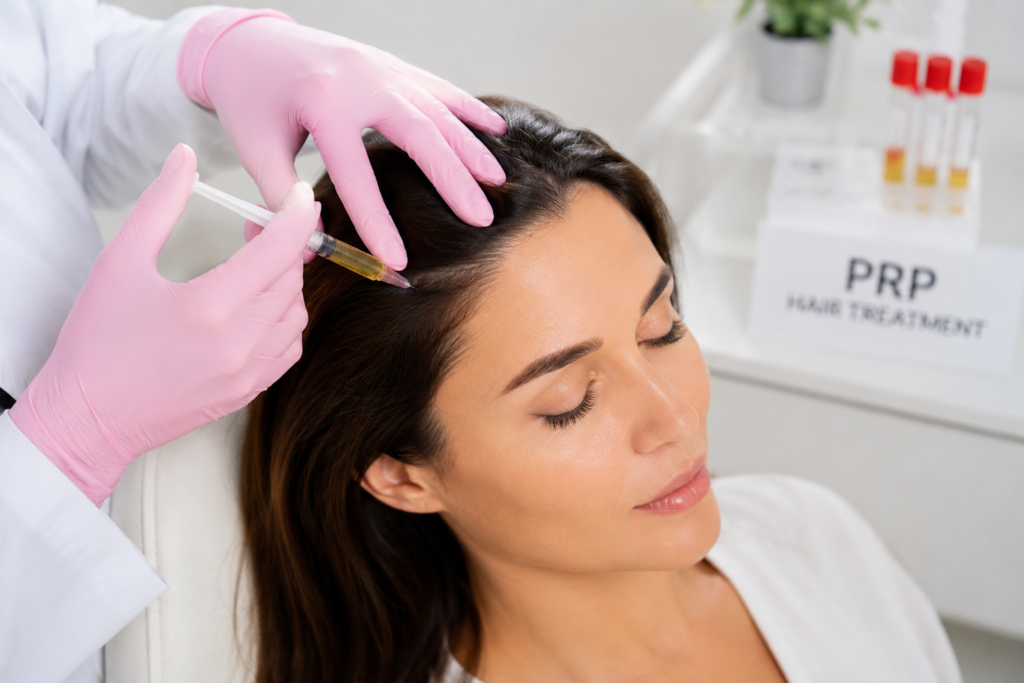
PRP stands for Platelet-Rich Plasma. The treatment uses your body’s own concentrated platelets and growth factors to support tissue repair and regeneration.
The process begins with a simple blood draw. The blood is placed into a centrifuge to separate and concentrate the platelet-rich plasma. That plasma is then injected into targeted areas of the scalp.
The goal is to stimulate weakened hair follicles, improve circulation, and create a healthier environment for hair growth.
To learn more about PRP therapy and regenerative aesthetic treatments, read our PRP therapy article.
How Does PRP Help Hair Growth?
Hair follicles can become weakened over time due to genetics, hormonal changes, stress, aging, or other factors. PRP contains growth factors that may help support follicle function and encourage healthier hair growth cycles.
PRP may help improve hair shedding, thickness, density, scalp circulation, and overall follicle health.
PRP does not create entirely new hair follicles, but it may help revive follicles that are still active but underperforming.
Who Is a Good Candidate for PRP Hair Restoration?
PRP tends to work best for patients who are experiencing early hair thinning, mild to moderate hair loss, receding hairlines, diffuse thinning, or stress-related shedding.
Patients with completely inactive or scarred follicles may not see significant improvement from PRP alone.
The earlier treatment begins, the better the potential outcome tends to be.
When Will You See Results?
One of the most important things patients should understand is that PRP results take time.
Hair grows in cycles, so improvement is gradual rather than immediate.
Most patients begin noticing changes within a few months, including less shedding, improved texture, fuller appearance, and increased thickness over time.
Results continue to improve with consistency and maintenance.
How Many PRP Sessions Are Needed?
Many providers recommend an initial series of treatments spaced several weeks apart.
A common approach includes 3 initial sessions followed by maintenance treatments every 6 to 12 months.
Treatment plans vary depending on the severity of hair thinning and the patient’s goals.
Does PRP Work for Everyone?
No treatment works universally for every patient, and PRP is no exception.
The best results are typically seen in patients who start treatment early, maintain consistent sessions, have realistic expectations, and combine PRP with a healthy scalp and hair care routine.
PRP is often most effective as part of a broader hair restoration strategy.
PRP vs Other Hair Restoration Treatments
One reason PRP has become so popular is that it offers a natural, non-surgical option with minimal downtime.
Compared to more invasive procedures, PRP may appeal to patients who want to avoid surgery, prefer regenerative treatments, want little downtime, or are looking for gradual and natural improvement.
In some cases, PRP may also be combined with other hair restoration treatments for enhanced results.
You can also explore the differences between PRP and newer regenerative treatments in our upcoming PRP vs Exosomes guide.
Is There Downtime After PRP?
Most patients experience minimal downtime after PRP hair restoration.
Some temporary symptoms may include mild tenderness, redness, slight swelling, or temporary scalp sensitivity.
Most patients return to normal activities quickly.
Frequently Asked Questions About PRP Hair Restoration
Does PRP hurt?
Most patients tolerate treatment very well. A topical numbing agent may be used to improve comfort.
Is PRP safe?
Because PRP uses your own blood components, it is generally considered very safe when performed appropriately.
Can PRP completely reverse hair loss?
PRP is best viewed as a treatment to support and improve existing hair follicles rather than completely reverse advanced baldness.
How long do results last?
Results vary, but maintenance sessions are often recommended to help preserve improvements over time.
The Bottom Line
PRP hair restoration has become a popular option because it offers a regenerative approach to treating hair thinning without surgery or significant downtime.
While results vary from person to person, many patients experience improvement in hair quality, thickness, and overall density when treatment is started early and maintained consistently.
For patients looking for a more natural approach to hair restoration, PRP may be a valuable treatment option worth exploring.
Interested in PRP hair restoration?
Schedule a consultation to discuss your goals and determine whether PRP may be right for you.